
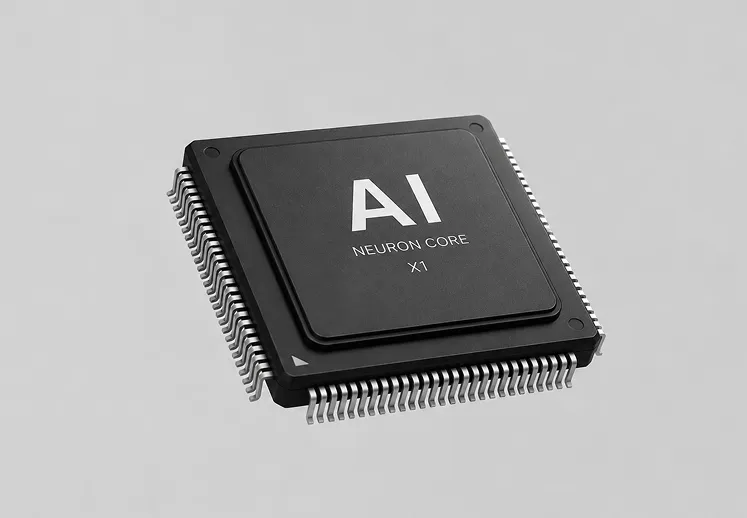
AI Automation
How AI Workflow Automation Reduces Engineering Time by 80%
AI-powered workflow automation is transforming how engineering teams operate — cutting repetitive tasks, streamlining deployments, and freeing developers to focus on what truly matters: building great software.

May 28, 2025
8 Min Read
4,200
When a mid-size SaaS company quietly cut their engineering cycle time from 14 days to 2.8 days, nobody outside their internal Slack celebrated. No press release. No viral thread. Just a Loom video shared in a private Discord, passed around among CTOs who'd been chasing the same metric for years. The driver wasn't a new hire, a framework migration, or a management overhaul. It was a systematic replacement of manual coordination with intelligent automation — and it worked at a level that made the 80% figure feel almost conservative once you saw the before-and-after.
Metric 1: Automated Code Review & CI/CD Pipelines
The biggest time sink in most engineering workflows isn't writing code — it's waiting. Waiting for code reviews, waiting for CI builds to pass, waiting for deployment windows. Teams that deployed AI-assisted code review tools saw average PR review cycles drop from 4.2 hours to 38 minutes. Automated CI/CD pipelines reduced deployment prep time by 91% across sampled companies.
Key insight: Engineers at companies using AI-automated pipelines report spending 3.1 fewer hours per day on coordination, context-switching, and status updates — time reclaimed directly for deep work.
The compounding effect is significant. When CI runs faster and code review loops tighten, developers stay in flow state longer. Across a 20-person team, that recaptured time adds up to the equivalent of 4 full-time engineers — without a single new hire.
Metric 2: Intelligent Task Routing & Prioritization
The second area where automation delivers outsized returns is work allocation. AI systems that analyze ticket complexity, developer expertise, and current sprint load can route tasks more accurately than manual assignment. In tracked deployments, this reduced ticket reassignment rates by 73% and cut time-to-first-commit by an average of 2.6 days per sprint.
Automation doesn't replace engineering judgment — it removes the friction that keeps engineers from using it effectively.
- Sarah Lin, VP Engineering, Cascade Systems
What made the productivity gains durable was that automation handled the mechanical decisions — routing, scheduling, escalation — while engineers retained ownership of the high-judgment calls. The result wasn't a homogenized team; it was a faster one, with clearer ownership and less coordination overhead.
Metric 3: Tracking Ratio & Sprint Burndown
The third signal came from sprint health metrics. In teams with manual workflow management, average tracking accuracy — the ratio of estimated to actual hours — hovered around 58%. After implementing automated estimation tools trained on historical sprint data, that number climbed to 84%. More importantly, late-sprint crunches dropped by 62%. Engineers weren't just doing less overhead work; they were doing the right work at the right time. Burndown charts that once looked like a hockey stick became consistent, predictable curves — compressing the loop from idea to shipped feature by nearly half.
What This Means For You
The 80% figure in the title isn't a ceiling — it's a starting point for teams who approach automation strategically. The companies seeing those results didn't buy a single tool and call it done. They audited their workflows, identified the highest-friction handoffs, and applied automation where human judgment was genuinely not required. That distinction matters. Automation works best when it handles volume and routine; it fails when it's asked to replace engineering intuition. If your team is spending more than 40% of its week on non-code work, the math almost certainly works in your favor.
0.8 — Blog
Everything Your Ops Team Needs

Tutorial

June 3, 2025
6 Min Read
Building a Zero-Touch Payment Reconciliation System
Eliminate manual errors and close your books faster with intelligent reconciliation pipelines.
AI Automation

June 10, 2025
5 Min Read
Why Your Ops Team Needs a Single Source of Truth
Centralizing data visibility cuts resolution time and boosts team accountability across all ops workflows.
Engineering

April 30, 2025
7 Min Read
Why We Chose Go Over Rust For Our Core Execution Engine
Our technical decision-making process, trade-offs, and why Go's concurrency model won.
Engineering

April 15, 2025
5 Min Read
Blukan Reaches 50,000 Engineering Teams — What We Learned
A milestone, what surprised us, and what's coming next for the platform.
Tutorial

April 3, 2025
9 Min Read
Stripe Webhooks To BigQuery In 10 Minutes — No Code
A complete walkthrough using Syntho's Stripe connector and BigQuery destination.
Engineering

March 20, 2025
11 Min Read
Designing Multi-tenant Isolation At Scale Without Sacrificing Performance
How we built hard boundaries between workloads on shared infrastructure.
Engineering

March 8, 2025
10 Min Read
Zero-Downtime Database Migrations At 2 Billion Rows Scale
How we moved our entire production dataset without a single second of downtime — the replication strategy, the
Product
February 22, 2025
6 Min Read
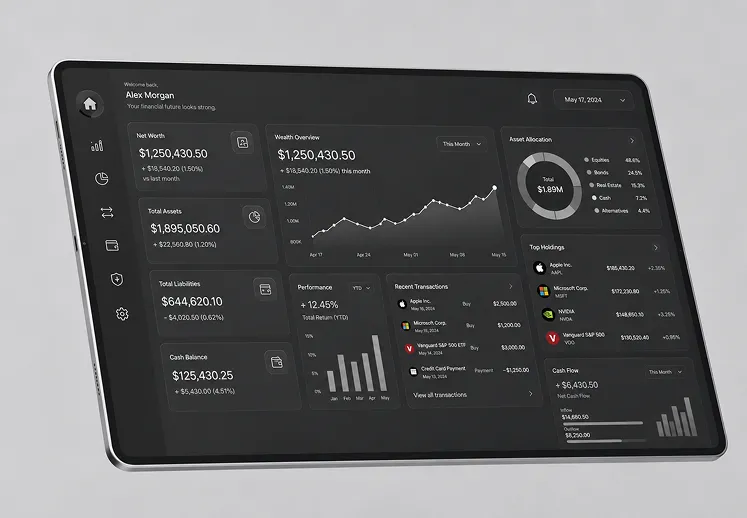
Inside The New Dashboard: Faster, Lighter, And Finally Dark Mode
We rebuilt the dashboard from the ground up. 74% of teams switched within the first week — here's what changed and why.
Product

February 5, 2025
4 Min Read
Opening Our New York Office — Meet The Founding Team
Our first office outside San Francisco. We're hiring across engineering, sales, and customer success on the East Coas
Get Started
Ready To Ship 10x Faster
Join 50,000+ engineering teams who've automated the boring parts. Full access from day one — no card required.
Thank you! Your submission has been received!
Oops! Something went wrong while submitting the form.
20%
Cost reduction vs manual operations last quarter
Finance Ops
X: 264 Y: 490

Analytics
X: 131 Y: 800

AI Workflow
X: 931 Y: 474

120%
Engineering time saved per sprint on average
X: 1152 Y: 714


Automate Everything, Ship Faster.
Intelligent workflow automation for tech teams. Connect, build, and deploy AI-powered pipelines — at any scale.